
- Finance or leadership asks for a monthly breakdown and you would rather not rebuild the same spreadsheet.
- Spend jumps and you need to know if it was a deploy, usage, or something the provider changed.
- You want teams to see their own numbers in Slack or Teams without you acting as a human report router.
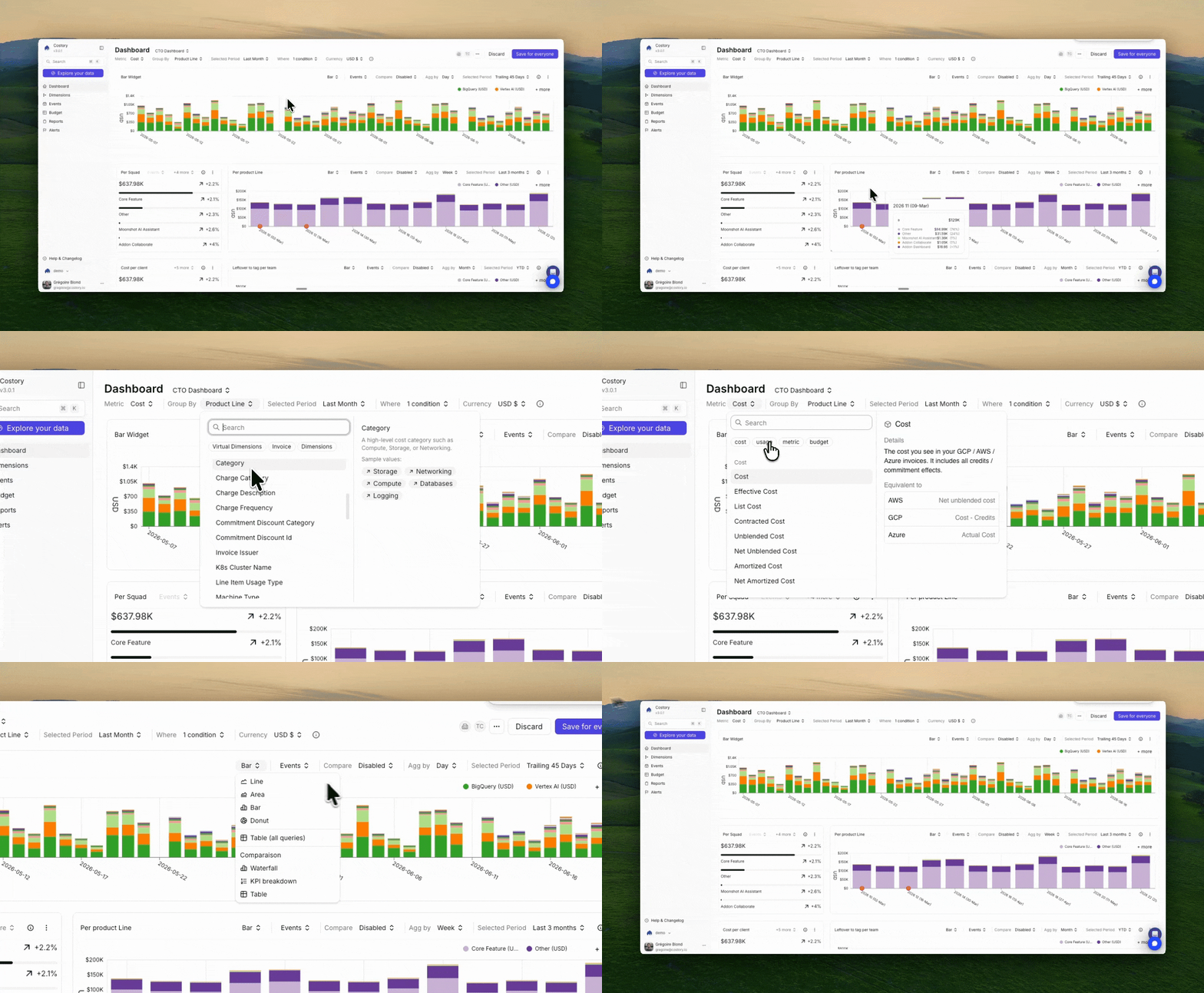
Explore normalized cloud costs and turn investigations into dashboards.
What you can stop doing
- Stop building and babysitting billing ETL just to get a unified view. Connect exports or APIs and Costory ingests line items. Start with Billing data.
- Stop running the monthly cost review by hand. Add a Cost digest to a Cost Report, tune the breakdown tree, and share Summary, Tree, or Table once it matches how your org talks about cost.
- Stop copy-pasting numbers into Slack or slides. Cost Reports send each team the right view on a schedule.
- Stop guessing why spend moved. Correlate costs with deploys, incidents, and provider events in Explorer, then add Events and Unit Economics.
- Stop untangling the same tags in every console. Use Dimensions to clean labels and map costs to teams or environments.
What Costory does
See all your cloud costs in one place
Costory pulls billing data from your providers and normalizes it into a single view. No more switching between consoles or stitching exports by hand. AWS, GCP, Azure, Oracle Cloud, Datadog, Elastic Cloud, OpenAI, MongoDB, Confluent Cloud. Explore everything in one Explorer.Understand why costs changed
Costory ties spend movements to causes you already care about
How correlation works
How correlation works
You always start by ingesting normalized billing into Explorer. Optionally, you connect event sources such as GitHub, CI/CD, or the custom Events API so deploys, releases, and other signals appear as timeline markers. Those markers sit on the same time axis as your cost curves, so you can compare spend with what shipped or changed. See Events and the Events setup guides.
Ask Claude or Cursor to investigate
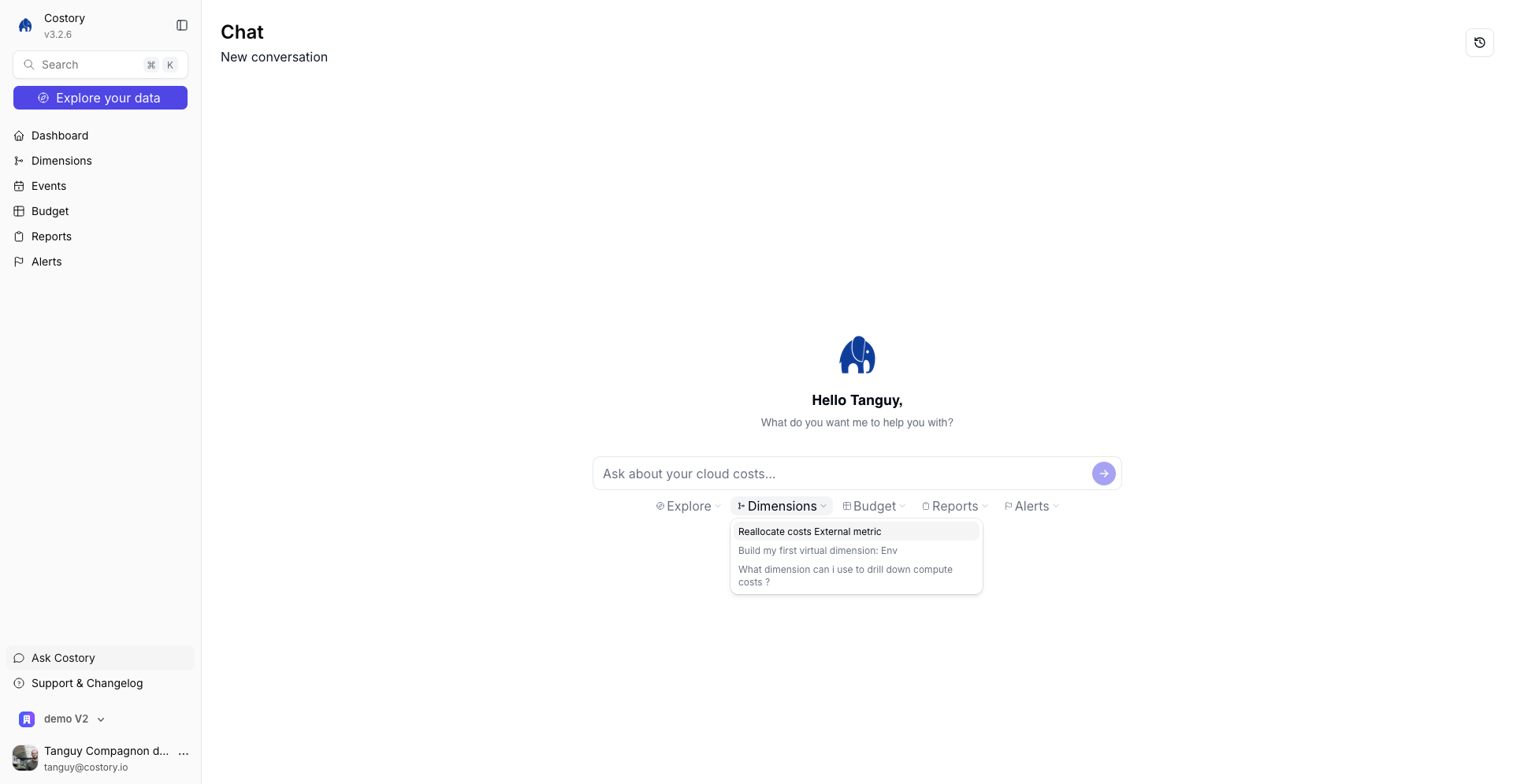
Costory MCP connects your Costory workspace to Claude, Cursor, VS Code, and other MCP-compatible assistants. Once billing data is connected, you can ask questions such as “what changed this week?”, “which services should I group by?”, or “prepare a dashboard for the data team.” Use the assistant to compare periods, find saved views, create alerts, send Cost Reports, and build the cost views that become dashboard widgets.Get reports automatically, not manually
A Cost digest breaks monthly spend into a tree and surfaces ranked changes with draft summaries. You adjust the dimensions until the story matches your team, then schedule delivery to Slack or email and review Summary, Tree, or Table in Costory. What used to take half a day to a full week can run on a schedule instead.Your first hour
1
Open the Quickstart
Create your trial and follow the guided path: Quickstart: automated cloud cost reporting in 30 minutes. Check Prerequisites so billing access and collaboration apps are lined up before you start.
2
Connect billing data
Link AWS, GCP, Azure, or other billing datasources. Costory uses read-only access to ingest exports or APIs. You do not manage warehouse schemas or sync jobs.
3
Connect Costory MCP
Add Costory MCP to Claude Desktop, Claude Code, Cursor, VS Code, or Dust using
https://app-api.costory.io/mcp. Authenticate with your Costory account, then ask your assistant to investigate the first cost spike, compare teams, or prepare dashboard views.4
5
Optional: organize and deepen
When you are ready, create Dimensions, add rule-based virtual dimensions where tags are missing, and turn on the Digest for a structured monthly review.
Start here
Costory starts with a 14-day free trial. Pricing uses a flat fee, so your subscription stays predictable as your cloud bill changes. See Costory pricing. For security and platform reviewers: Costory runs on Google Cloud Platform (GCP) with encryption in transit and at rest. Billing connections use read-only access to your exports or APIs. Review Security, Subprocessors, and SSO and access control.More for security and platform reviewers
More for security and platform reviewers
Users authenticate through Clerk, including OAuth with common identity providers. SSO, SCIM directory sync, and RBAC options are covered in SSO and access control. Customer data retention can be aligned with your policy. How read-only billing access works is described in Billing data.
Week one
Quickstart
Trial, billing connection, and first report end to end
Billing data
Providers, ingestion model, and read-only access
AI Assistant (MCP)
Connect Claude or Cursor to Costory and investigate costs from chat
Cost Reports
Scheduled cost updates per team channel
When you need more
Explorer
Multi-cloud exploration, drill-downs, and event context
Digest
Monthly tree, ranked changes, and draft summaries you refine before sharing
Dashboards
Turn saved views into shared cost dashboards
Dimensions
Merge labels, allocate untagged spend, and split shared costs